
The Ecology of Survival
- Rakesh Shukla

- 12 hours ago
- 9 min read
Updated: 3 hours ago
(The ‘Kanha as a Moveable Feast’ Series)
This article series derives its spirit from ‘A Moveable Feast’ a memoir written by the famous American author Ernest Hemingway. In his memoir, he wrote that if one has lived somewhere passionately, it remains with you, nourishes you, wherever you go. My long years at Kanha have been something of that kind - a landscape of memories, reflections, animals, seasons, panoramas, and, of course, questions that still travel with me, long after I bade it goodbye.

by Dr. Sanjay Kr. Shukla
It was a cool spring afternoon at Kanha, and on a slow drive along the forest road paralleling the grassland, I was watching a small herd of gaur grazing close by. These catholic feeders were making the most of available forage nonchalantly in a characteristically bovine way, paying no special attention to being watched. Amid this sheer tranquillity and serenity of the nature reserve, I turned my attention to watch the bull nearing the road to cross it.
Suddenly, the nearby shrub exploded as a stalking tiger leapt out and pounced upon the posterior of the gaur. It was so sudden and forceful that the bull almost stumbled to the ground. Now, I had a full view of the bull’s hindquarters, and I saw that the tiger had clenched the lower thigh with its strong jaws. The bull, snorting and bellowing in a rage and fear, was trying to free itself by frequently turning around, almost dragging the tiger, and swinging its horns. Amid this gruesome drama, the tiger’s grip once loosened, and I saw blood oozing out of the torn muscles of the leg. The tiger quickly adjusted its bearing, and grabbed the thigh again, sitting down on the haunches and trying to pull down the gaur. The tiger continued gnawing at the thigh, making the gaur almost completely incapacitated. And the leg could no longer sustain the bull’s weight. Technically, the tiger had hamstrung the gaur by severing its hamstring complex muscles just above the knee on the back of the leg. These muscles are responsible for movements like walking and running. The tiger now started eating the tremulously moaning gaur alive. This tiger has to survive, and is merely playing a role assigned by nature.

By Sudhir Mishra
Strongly built, and the largest wild cattle in the world, weighing almost three times over the tiger, it was now reduced to an appalling black heap of live muscle mass. Ironically, the bison remained on the verge of death for some time. It was to suffer the agony of feeling what it was like to be eaten alive for some time. It had also played its role as food to the tiger. And anthropomorphically, which is generally frowned upon in conservation, I recalled Arthur Schopenhauer’s, the German philosopher, pessimism who once observed that “one simple test of the claim that the pleasure in the world outweighs the pain is to compare the feelings of an animal that is devouring another with those of the animal being devoured.”
A natural world
Speaking generally, a nature reserve is a specially preserved natural area for the conservation, research and study of floral, faunal, geological and many other region-specific natural attributes of interest. Such nature reserves may either be terrestrial or aquatic, with specific goals and objectives of management. They are so selected as representatives of large areas of certain natural significance. Their natural attributes may include forest and grassland types, hills, deserts, and sea etc., with all their natural resources, including living and non-living forms, materials and processes.
In India, protected areas are also loosely known as nature reserves. These protected areas have been categorized into national parks, core zones or critical tiger habitats (CTH) of tiger reserves, wildlife sanctuaries, conservation reserves and community reserves depending upon their management importance and legal standing. While we have an impressive protected area network, most areas are more or less islanded in an appallingly vast sea of humanity and resultant biotic pressure.

by Dr. Sanjay Kr. Shukla
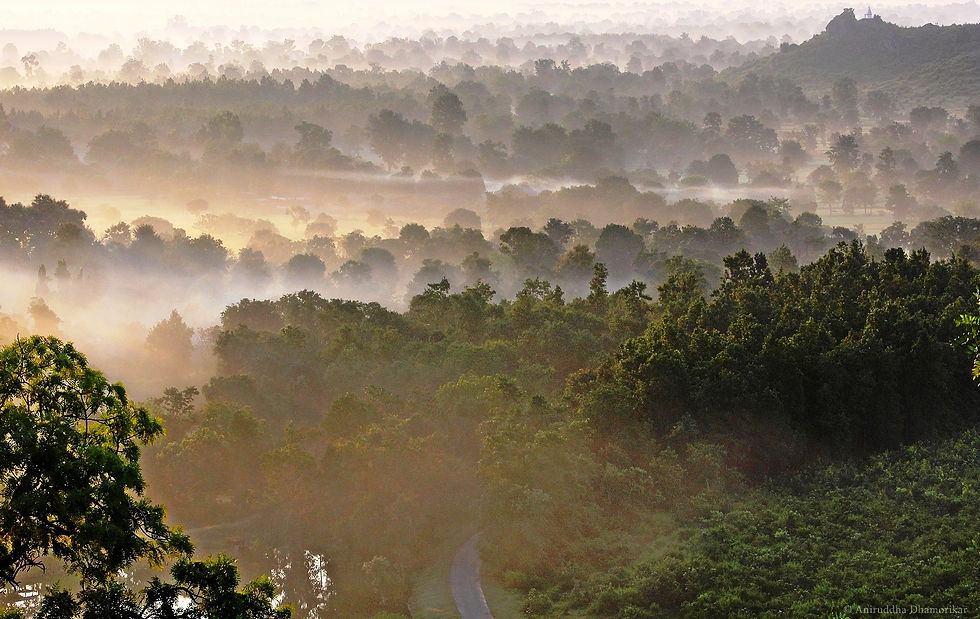
Kanha can be conceived as a landscape of large mosaics of several vegetal cover and land use types of almost the same crops or different combinations of mixed species, grasslands, clearings, hollows, water bodies, and roads. Until some time back, before gradual relocation of forest villages, the Kanha core zone also harbored mosaics of habitations and agriculture. All these mosaics were spatially distributed on and across different terrains and topographies resulting in horizontal and vertical arrangements of various vegetative and non-vegetative elements. Now with no village/ settlement inside the core, this is a more or less perfect setting for a natural world that offers several types of wildlife habitats to sustain thousands of animals of different species.
Habitat is a home to wild animals, and includes four basic components - food, water, cover and space. All living animals, including even the tiniest microorganism, need habitat for survival regardless of their physicality. Food, naturally, is the most obvious component, and animal species have to cope with spatial and seasonal variations in its availability. The importance of water to wildlife throughout the year needs no special mention. Cover of any kind affords protection from predators and weather. It is also used for rest, fawning or refuge. Predators also use cover for ambushing their prey species. Space is needed for movement, foraging, loafing, and interacting with conspecifics. Adequate space should also be available for a wildlife population of certain species and size. Further, an ideal arrangement meets all of their requirements in a small area to minimize the energy used on switching from one component to the other.
The types of vegetation and habitats of wildlife in a nature reserve depend upon the physiography, geology, climate, and precipitation. The physiography of Kanha is characterized mainly by forested shallow undulations, hills with varying degrees of slopes, plateaus, and valleys. These physiographical features along with sal, miscellaneous crops and bamboo offer unique settings and ecotones or transition zones between two different vegetative mosaics, giving rise to diverse types of macro- and micro-habitat for various wildlife species
Habitat and coexistence
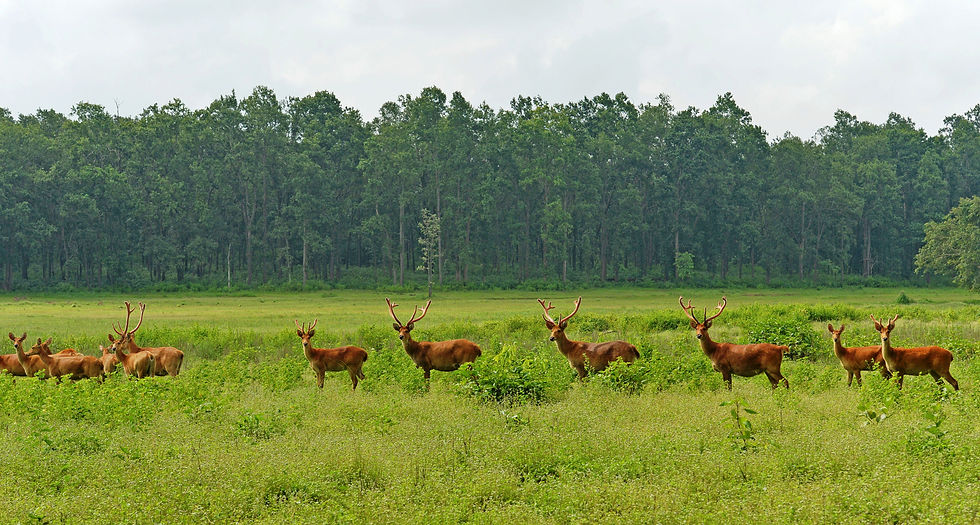
In this way, habitat is regarded as an address of a species where it spends its natural lifespan. A species uses a habitat by availing itself of its physical and biological entities, depending upon the availability and accessibility of them. Species make environmentally appropriate habitat selection, which is a hierarchical process, through many innate and learned behavioral decisions. If a species prefers a habitat or a location therein, in a relative sense it indicates more intensive use of the area by individuals. A quality habitat provides relatively appropriate conditions for a species for its prolonged usage. Endangered species like the hard ground barasingha may have special habitat requirements that have to be further augmented through managerial interventions.

by Dr. Sanjay Kr. Shukla
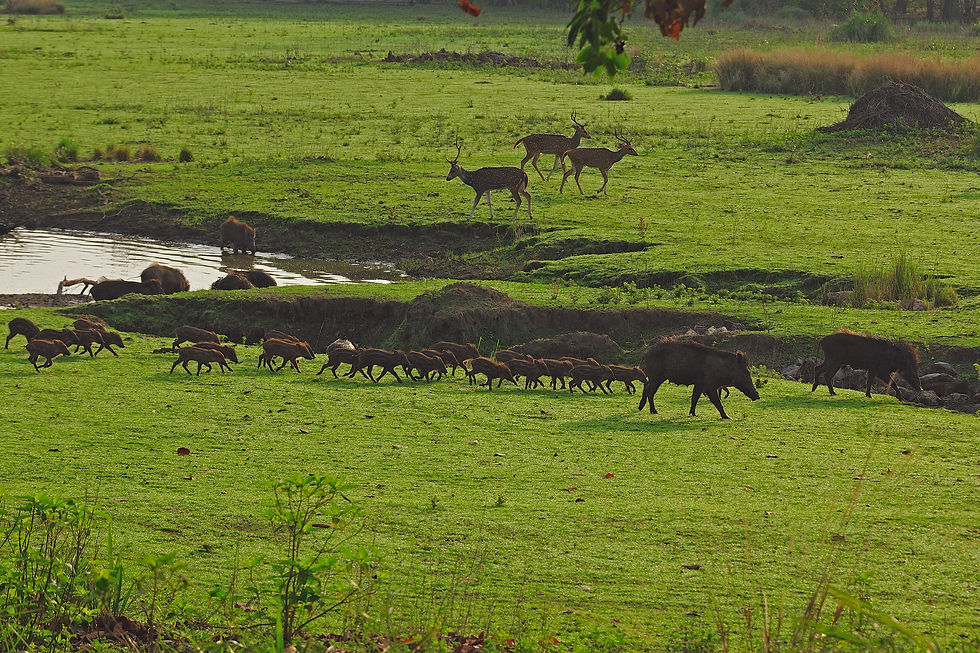
Now, ecological niche is an important concept that helps us understand relationships between habitat and different wildlife species. Niche is a profession or role played by each species in its natural habitat. As niche is a role rather than a place or location, it can only be described in terms of interaction between the environment and the species. While some species have broad niches that help them exist in a wide variety of habitat types, others have narrow niches for survival in limited habitat types. That is how species are known as food generalists and food specialists, and the latter have to struggle really hard for survival. Such species are gradually prone to be rendered endangered with declining populations. For instance, the hard ground barasingha at Kanha is a food specialist and the deer is almost totally dependent on grasslands, grazing on grass only. It is different the chital, which is both a grazer as well as a browser, and if the grass dries up in the high summer, it can switch to browsing on leaves. An ecological niche describes how a species interacts with, and lives in, its habitat, and affects its environment, including its own day to day requirements. Therefore, speaking generally, animal activities like feeding, hunting, resting, loafing, breeding, and fawning, until dying naturally or through predation are studied under this concept.
by RB Pathak
by Dr. Sanjay Kr. Shukla
General food habits of species make them either carnivores or meat eaters, herbivores or plant eaters, and omnivores or both meat and plant eaters. Even within these three major feeding categories, each species has its own specific food habits and ways of exploiting its habitat to a large extent. While a herbivore species’ habitat includes grasslands and forests, a carnivore species’ habitat would include all such areas with its prey species.
No animal is immortal, and each species has a certain average lifespan determined by heredity and genetics beyond which it cannot survive even in the most favourable natural conditions. Most animals, however, in good zoos are expected to reach their upper natural age limit under excellent veterinary care, nutritious food and hygiene, and of course with no predation. Unlike a zoo, an example of ex-situ or off-site conservation, a nature reserve is an in-situ or an on-site conservation location, where conservation practices aim at the maintaining species diversity and the prevention of species extinction in a natural way.
Survival Games
The Kanha core supports co-occurrence at least three major carnivore and eight herbivore species. Now imagine this coexistence of thousands of these animals exploiting overlapping resources of food for survival. There exists a natural segregation amongst themselves on the basis of ecological niche partitioning that include food habits, habitat separation and specific ecological requirements. The very basis of inter-species relationship in the Kanha ecosystem can be understood through the concept of ecological pyramids, which is a graphical representation and shows which species consumes whom. In this way, while the primary producers are plants consumed by a large number of different ungulate species or primary consumers, they in turn are killed by secondary consumers or carnivores. And through this arrangement the tiger, the tertiary consumer, finds itself at the top of this pyramid as the apex predator. While carnivores have to hunt or kill their prey species through various strategies like stalking, coursing, chasing and ambushing etc., herbivores in their present incarnation are fated to be on all alert throughout their lifespan through large aggregations, constant vigil, alarm calls, taking shelter in refuge covers, and successful escapes etc.
by Aniruddha Dhamorikar

by Shilendra Uike
Now species-specific niches help reduce competition, and no two species, carnivores or herbivores, occupy the same niche in a habitat for the same resources. In case two species compete for the same resource, natural selection will reduce the dependence of these species on this overlap. The competition will be reduced if any one of the species is successful. If, however, no species evolves and reduces the competition, then the species that exploits the overlapping resource most will succeed and the other may decline and finally go locally extinct.
Nature has helped these ungulate species evolve different feeding strategies to reduce inter-specific competitions. Currently, they all occur at a density of around 87 animals per sq.km. Body size and metabolic rates of different ungulate species also have to play an important role in this. Besides, geographic barriers and some prime areas have also resulted in creating several habitat pockets characterised by large aggregations of ungulates at Kanha. Generally, valley meadows and undisturbed habitat mosaics of some forest ranges support such huge assemblages. Conversely, some ridges, rugged terrains and biotic pressure prone areas of some forest ranges sustain only small assemblages of herbivores. The distribution of carnivores is also regulated by the presence and movements of these ungulate species.
The predator-prey relationship maintains the dynamics and health of the Kanha wildlife ecosystem, and any serious disturbance may cause either population explosions or crashes, which is unnatural. The Kanha ecosystem supports the tiger as the main predator, and the leopard and wild dog as co-predators. These predators rank as such in the predation hierarchy, and have a distinct niche of their own.
Tigers, generally, prey upon large-sized ungulates, and travel over a long distance in their home ranges, away from habitations. While tigers kill a wide range of ungulate species, sometimes even an adult bison or a langur, or even a python with a freshly swallowed ungulate, the chital forms the most of its annual consumption. Besides, tigers also prey upon livestock on the peripheral areas of the Kanha core zone.

by Sanjay Dutt Sharma

by Anant Zanjale
Leopards generally have smaller and almost stable home ranges close to habitations. There seems to be no competition between the tiger and leopard, and they follow the tactics of mutual avoidance. Leopards, however, are sometimes also known to operate close to the movements of tigers. They generally kill small-sized preys, including domestic dogs, goats and birds.
Wild dogs are more transients, and travel frequently in packs over large distances. Though their home ranges overlap with those of tigers and leopards, their presence is so fleeting that they seldom come into conflict with the other two predators. The other lesser predators such as foxes and jackals prey upon small herbivores, rodents and birds. While these animals hunt by stalking, pouncing, and using sharp auditory and olfactory senses, they protect themselves by hiding in dens, staying alert, avoidance and their nocturnality.
Various intra- and inter-specific relationships among different species of carnivore and herbivore affect their survival at Kanha. Ecologically, these interactions result in the adjustment of equilibrium. In predation, we see the killing of prey, which is generally smaller in size. When two species enter into a direct competition, for instance tigers and leopards, barasingha and chital, the inhibition of one species is observed in some areas. There is also an indirect competition between ungulates and cattle for the overlapping resources in villages close to the core zone. This usually results in the inhibition of ungulates in the peripheral areas of villages. Chital and langur show mutualism through ecological facilitation or probiosis that benefits both.

by Anant Zajale

by RB Pathak
So, this is how Kanha, and for that matter any other good tiger reserve, preserves intricate ecological relationship and helps nature continue as a self-sustaining system. It is a proverbial battleground, so to speak, of life and death, and each denizen has to draw energy from another and remain a part of the same chain of survival. It is actually timeless laws that govern these wilds. These laws are utmost important for the continuance of life on the planet.


Comments